
Chapter II, Instalment 8
Yet it is in the tavern that agreements, and disagreements, are discussed and begun. Sheltered by its round tables, its music and its spirits, relationships between fellow citizens are born in an exchange of words and, naturally enough, eventually dissolve into the branches of the spider city, into the Earth's veins. Everything passes and remains.
Our divago is still on the trail. He keeps poking his bloodhound's nose among yellowing pages, and now and then his eyes follow Almah's movements through La Caverna. Sometimes the miner's rugged face comes to mind; at others, he wonders whether there might be another way of approaching her, Almah, besides words. He looks up and surveys the scene.
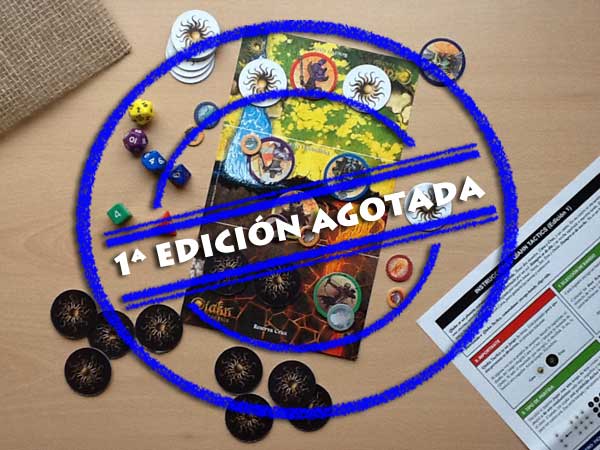
At a quarter past three, a group of nanos amuse themselves in their booth, playing the fist game and bellowing the tune of ‘The cockroach, the cockroach’, while another group of girls and boys slide flattened bottle caps across the floor: flat, round counters bearing ancient medieval figures on their faces: foot soldiers, archers and knights, mages. The gang plays by rolling dice ranging from the tetrahedron, which counts four, to the icosahedron, which counts twenty; a certain Xuan, playing a paladin, uses the regular dodecahedral die. It is said that Davinç devised these dice with their varied numbers, giving them a number related to the proportions in which the tentacles of the spider-city model join, take shape and divide into tunnels.
A prospecting unit consists of ten nanos, nine and a dean, whose horns, worn by the projections along alternative routes, show that he has a good pair on him: the more worn down, the better they sit on his helmet. The dean never plays. He rests, mixes spirits and sometimes takes a little nap. When they want to play ahntics, since a team has six members, one for each counter representing a character, three nanos from the unit are left over. That is why the gallant fellows need two units to form three teams, and even then six nanos always sit out, because a match pits only two squads against each other, one defending and one attacking.
For now, the solution that lets them play together is to enlist the children, to the displeasure of certain units who prefer the fist game because the youngsters usually beat them. Davinç is considering a few tweaks to the rules and will present them to the community when he sees fit.
To be continued